|
|
2025 BP COMMITTEE MEMBERS GRANT - INITIAL RECIPIENTS
Andrew Amara
|
A Preliminary Budget Calculator for Sustainable Housing
Preamble
Over time I have come to realise that the cost-question sometimes obscures other key factors in the pursuit of housing. Cost ‘means the world’ to many home owners. It is, often, the first and single determinant of many decisions and affects the variety of permutations of materials and what these mean for shelter; the culture there in and the function of it. This indirectly spirals into impact on sustainability, availability, durability, etc.
I would like to direct the client-consultant (architect-homeowner) discussion on cost; and feed it with the other equally important questions; I would like to curate the answer to the cost question and cast it against other players; unpacking the myriad of possibilities and giving the homeowner a chance at alternatives that would have otherwise been missed.
Overview
I apply for a grant to support the development of a digital web-based tool; “Budget Calculator for sustainable housing”. This application will empower low and middle-income homeowners in Uganda by providing transparent, accessible and locally relevant preliminary cost estimates for sustainable technologies in housing projects. Alongside preliminary costing, the tool will present the impact of various technologies for sustainable architecture to the everyday families striving to build homes.
Background
For long I have pondered over and worked with various engineers to bring the very latest of material and sustainability innovations to housing for low and middle income groups. From the $ 5,000 USD 2-bedroom house in Nansana, to the 150 units estate that the National Pension Fund is developing to redefine affordable housing in Kampala.
Unfortunately the perceived hidden costs, unreliable contractors, and lack of clarity around materials and options frequently continue to derail projects, and leave some home owners questioning whether to pick sustainability! Some households, assume that “cutting edge” is ‘expensive’; others are ignorant of the debates; such as the gravity of rapid population growth in the context of finite resources, urbanisation and changing climate.
The proposed calculator will allow users to input simple parameters—plot size, number of rooms, finishes, and choice of sustainability-components to save on materials, energy or water. The user will then receive outputs on preliminary costs and suggestions on permutations. Beyond the numbers, the tool will suggest pros and cons such as cost effectiveness, durability, or climate-appropriateness, while offering checklists for regulatory compliance, available incentives and the breadth of impact on the environment.
Student Involvement
Undergraduate students of architecture, quantity surveying and computer engineering from Makerere University will participate in the project through research, prototyping and user testing. They will help design culturally sensitive templates, collect local material price data, and engage communities in a participatory workshop. This involvement will expose students to the architecture as a social art — an act of empowerment and inclusion.
Funding Request: I am requesting the full $10,000 grant to cover:
- Community workshop and student stipends
- Software & website application development and prototyping
- Data collection and price database for materials and technologies
- Documentation (a manual, digital launch)
I already have the resources for website hosting, and two experienced quantity surveyors in the housing sector.
This stage is a proof of concept and a launching pad for perhaps an android-based app that can be scaled to other regions or augmented with more local context or AI attributes.
Projected Completion Date: 7 Months Timeline.
Andrew Amara
B.Architecture, Msc Urban Development & Planning, MBA, Certified Green Building Expert
Principal Architect at Flame Consultancy Group
Project Management Consultant for UN – UNICEF & WFP
Visit: https://townbuild.net/word/ for illustration of past participatory house planning & design
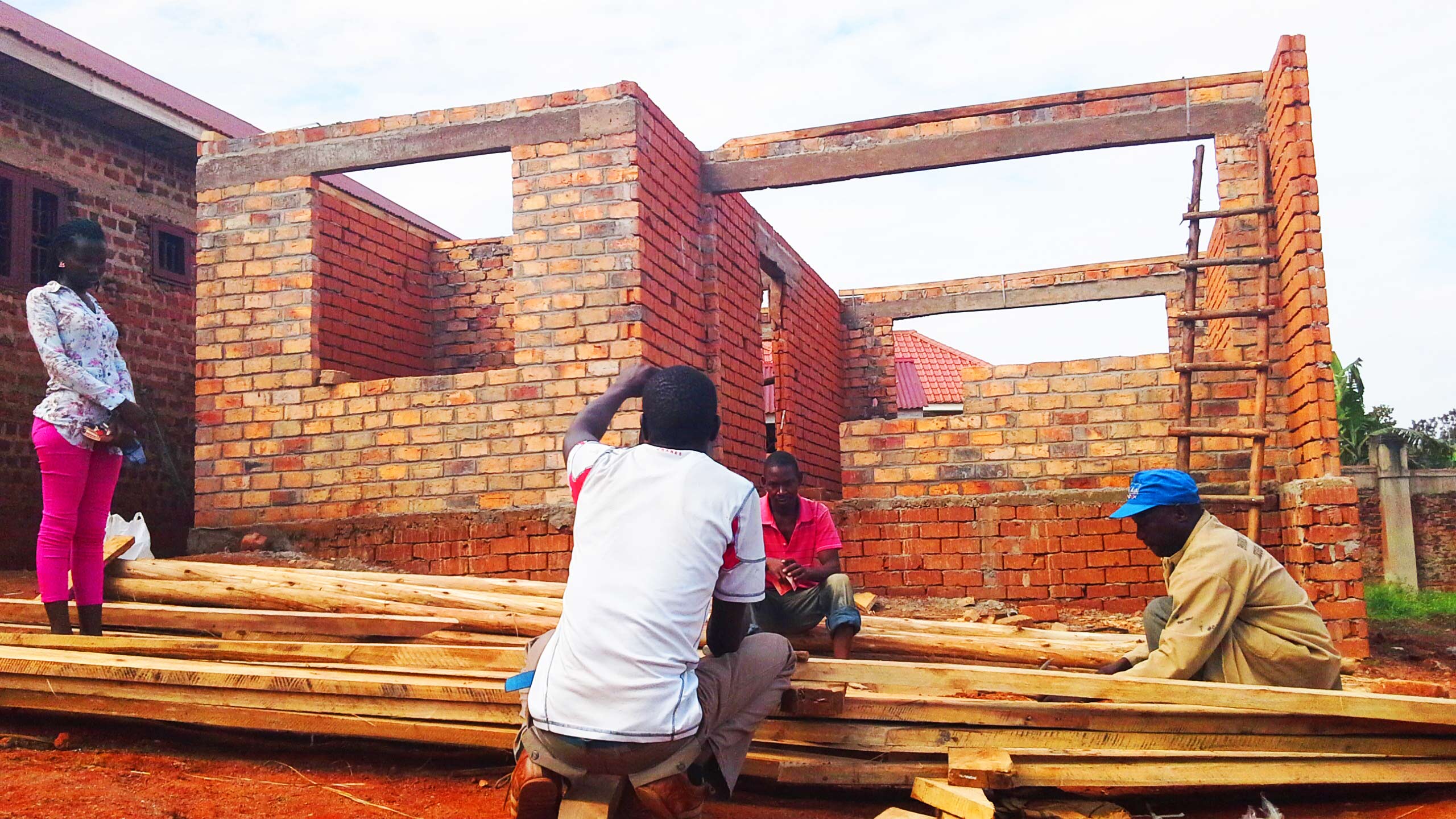
Local residents participate in comparing cost effectiveness of clay vs earth blocks (Nabweru, Nansana, Kampala - TownBuild Project)
|
Ellen Chen
Reinvigorating under-utilized spaces with creative community pop-ups
Vision:
I envision playing matchmaker between faith-based organizations that have access to historic spaces and local entrepreneurs looking to pilot community pop-ups and tangibly bridging that access to opportunity. Having worked in both public + private sectors, I see this as an innovative solution to a dual-ended problem where declining attendance in houses of worship have left congregations hungry for creative ways to repurpose and leverage their underutilized spaces for social impact. Meanwhile, NYC attracts tons of young, creative entrepreneurs who are looking for more affordable places to pilot their small businesses, instead of getting locked into a more expensive long-term lease.
Defining a dual-sided problem:
Leveraging a values-aligned network of creative entrepreneurs to reinvigorate under-utilized spaces and providing long-time landlords the opportunity to reimagine their space as temporarily supporting community ventures.
Background:
Two years ago, I began supporting a few creative entrepreneurs in NYC during their career pivot (i.e. one client was an actor who I helped to stand-up a children's education company; another client was a former model who was interested in developing an import/ export business) by offering mentorship on marketing, competitive research, business plan design, customer surveys, and go-to-market strategy. I am grateful to have been able to help connect these entrepreneurs to local houses of worship that were open to temporarily housing "community pop-ups" in a pilot stage through proof-of-concept. I loved brainstorming alongside local community leaders on how to make the best use of their underutilized space while connecting an older generation to a young and burgeoning pipeline of creative entrepreneurs hungry to test out their new ideas with a renewed sense of purpose & imagination in an expensive, six-figure city.
In California, where I grew up before planting roots in NYC, there is a Center for Housing Innovation that built partnerships with faith-based organizations with nearly 50,000 acres of potentially developable land. While NYC is definitely its own unique market with less developable land, I see the potential of congregations leveraging historic buildings to creatively boost their income while benefiting the community by meeting the needs of Millennial & Gen Z entrepreneurs wanting to pilot their rapidly evolving business ideas on a shoe-string budget. Securing this grant will help me to continue the work of building partnerships between city government, local entrepreneurs, and various faith-based congregations that are in a transitional stage of development in order to help convert part of their properties to temporarily house social ventures to address community needs.
While I currently serve as adjunct faculty at the Cooper Union, teaching classes on human-centered design & strategy, I am also working in city government on affordable housing initiatives and am passionate about opportunities to keep Ray Lifchez's legacy alive through reimagining the "social art of architecture." My hope is that this generous grant and my past experiences can support the growth of fun, mission-driven entrepreneurial endeavors that demonstrate positive community impact.
Kim Dovey
|
ENGAGING WITH INFORMAL ARCHITECTURE AND URBANISM
___________________________
Overview:
I hereby apply for a grant to support publication of a range of architecture and urban design studio projects that have developed through studies of informal settlements in South and Southeast Asian cities. These projects involve mapping and analysis of these settlements as well as architectural and urban design visions for upgrading in a context of ethical co-production.
Background:
Informal settlement is the primary form of affordable housing in many global South cities. While often stereotyped as 'slums' and threatened with demolition, such settlements are often complex, vibrant, dynamic, productive and resilient. On-site upgrading with community collaboration is the only pathway to sustainable redevelopment of most settlements, but this requires major changes to the education of architects and other built environment professionals, including grounded experience of the complex ways in which informal architecture and urbanism works. The Informal Urbanism Research Hub (Infur-) at the Melbourne School of Design (MSD), University of Melbourne has led several travelling studios to study such settlements in South and Southeast Asia in cities such as Jakarta, Manila, Bandung, Yogyakarta and Mumbai. These studios have been run in collaboration with local universities in the home cities, NGOs and community-based organizations. While geared to my own research on informal settlements (Atlas of Informal Settlement (2023) and The Spatial logic of Informal Urbanism (2024)), this project will also involve the collaboration of MSD colleagues who have also led these studios: Ash Alam (Urban Planning) and Amanda Achmadi (Architecture) with backgrounds in South and Southeast Asia respectively.
The Project:
This project will produce a book and web-based resources that describe the pedagogical and ethical framework for conducting these studios, along with a range of mapping, analysis and design work produced. This publication will be directed at three primary audiences: first for the communities we have worked with as a record of their collaboration and the ideas that might be implemented; second, as a globally accessible student resource for how to study informal settlements; third, as a more formal research publication analyzing and comparing South and Southeast Asian cities.
Student Involvement:
These travelling studios have involved a total of about 45 graduate students in architecture, urban design, landscape and planning from the MSD, who collaborate with students from local universities and spend up to a week investigating a single settlement before presenting ideas back to that community.
Funding:
Travel costs for students and staff have been provided or subsidized by the MSD. Additional funding is required to employ Research Assistants to collate, edit, curate and format this work for both web-based and book publication. I will oversee the project and Infur- will provide in-kind contributions through staff time. I am requesting the full $10,000 from the Berkeley Prize Endowment to cover a total of approx. 200 hours of Research Assistance across a full year plus costs for full colour and high-quality publication. We anticipate that this will employ several students who have been involved in these studios, and who seek to pursue these ideas further; much more than collating existing materials this will involve development of modes of visual representation for the complex ways in which informal architecture and urbanism works; the work will be geared to PhD research and will include co-authorship.
Projected Completion Date: mid-2027
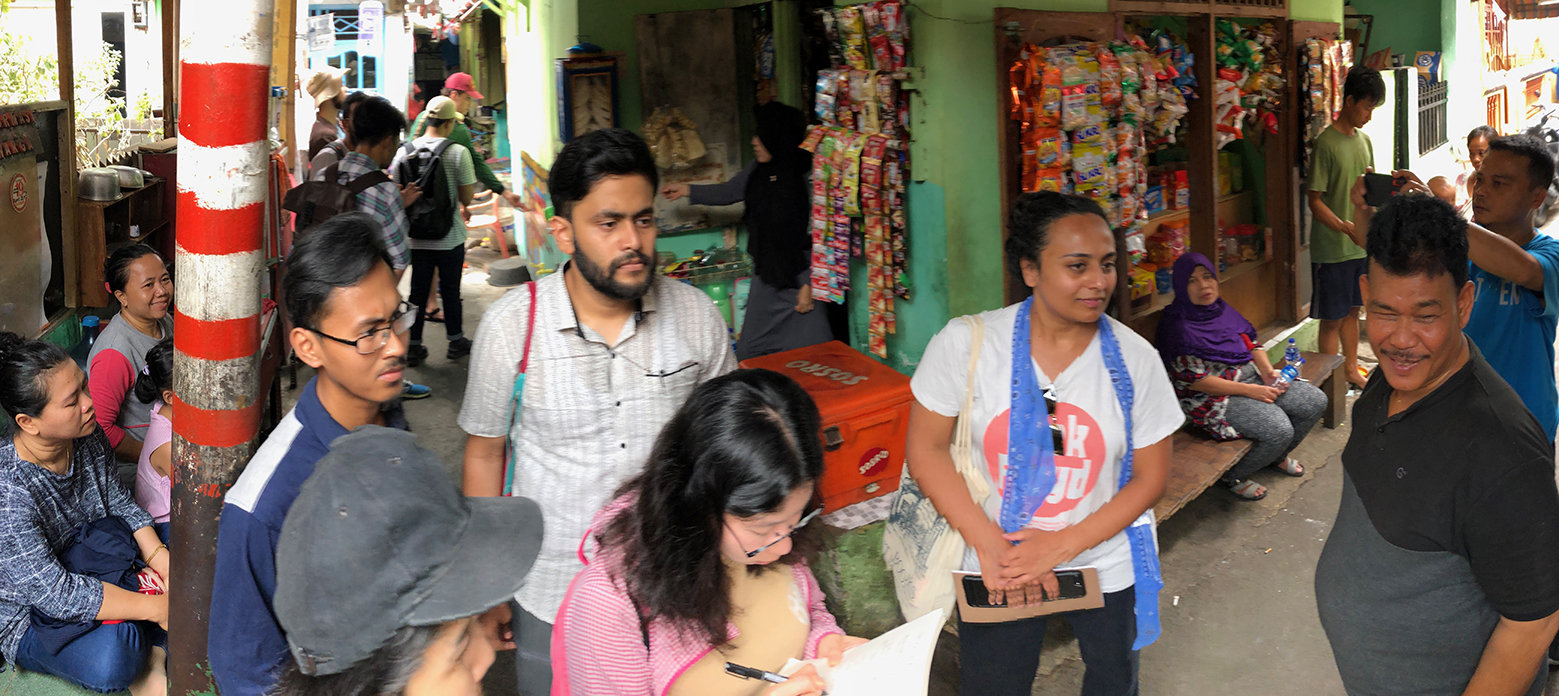
Kampung Rawa, Jakarta
|
Ocean Howell
|
Berkeley Prize Endowment 2025 Grant Proposal
“PLANNING FOR POWER”
___________________________
Overview
I am applying for a grant from the Berkeley Prize Endowment to support a digital publication with Stanford University Press. The project, tentatively titled "Planning for Power," uses comparative analysis of historic maps to demonstrate how urban planning traditions have accommodated, and occasionally challenged, political power.
Background
Historians have long understood urban planning as an arena in which interest groups compete for resources and legitimacy, but most studies rely only on textual sources like governmental reports, newspapers, voting records, census data, and correspondence. Such an approach is necessary but insufficient to a comprehensive understanding of planning and power. Because planners communicate with maps the plans they produce often speak volumes about interests and dynamics upon which textual sources remain silent.
"Planning for Power" is a book manuscript presented in a digital format that allows flexible reading pathways and--crucially--the capacity to present comparative cartographic analysis through imagery. This book grows out of my "Imagined San Francisco" project (imaginedsanfrancisco.org) that I developed at Stanford's Center for Textual and Spatial Analysis (CESTA) between 2016 and 2020. Using this platform I will create the "Planning for Power" digital manuscript.
Student Involvement
This project has involved at least twenty undergraduate students from Stanford and the University of Oregon (UO), and several graduate students from the UO. In 2024 I taught an undergraduate/graduate seminar where students built their own websites using the software, focusing on subjects ranging from the Japanese occupation of Beijing, to the colonial planning of Manila, to military basing in Seattle. Undergraduates thereby offered crucial insights as testers of the software platform. Undergraduates have also contributed by georeferencing maps and conducting light research. Graduate students have also been crucial, writing the code that undergirds the project, streamlining workflows, and creating onboarding guides to the software.
Funding Sources to Date
Stanford University Press has expressed strong interest in publishing this project as part of their Digital Humanities list. Due to a combination of steep funding cuts and the expiration of a Mellon grant, the Press requires a $15k subvention to support any digital project. As a professor at a major public university, my annual research budget would be woefully insufficient to cover this expense. I am therefore requesting the full $10k from the Berkeley Prize Endowment to cover the majority of the subvention. This grant would make "Planning for Power" possible.
Projected Completion Date
With this grant, we expect that the digital book manuscript will finally be published by the end of the 2025-2026 academic year.
Thank you for your consideration.
____________________
Ocean Howell, Ph.D., Associate Professor of History, University of Oregon
Practice Areas: Urban Planning, Design and Architecture, Urban History, History of
Race, Gentrification, Defensive Architecture, Planning Debates, Youth Culture
https://news.uoregon.edu/expert/ocean-howell-department-history
____________________
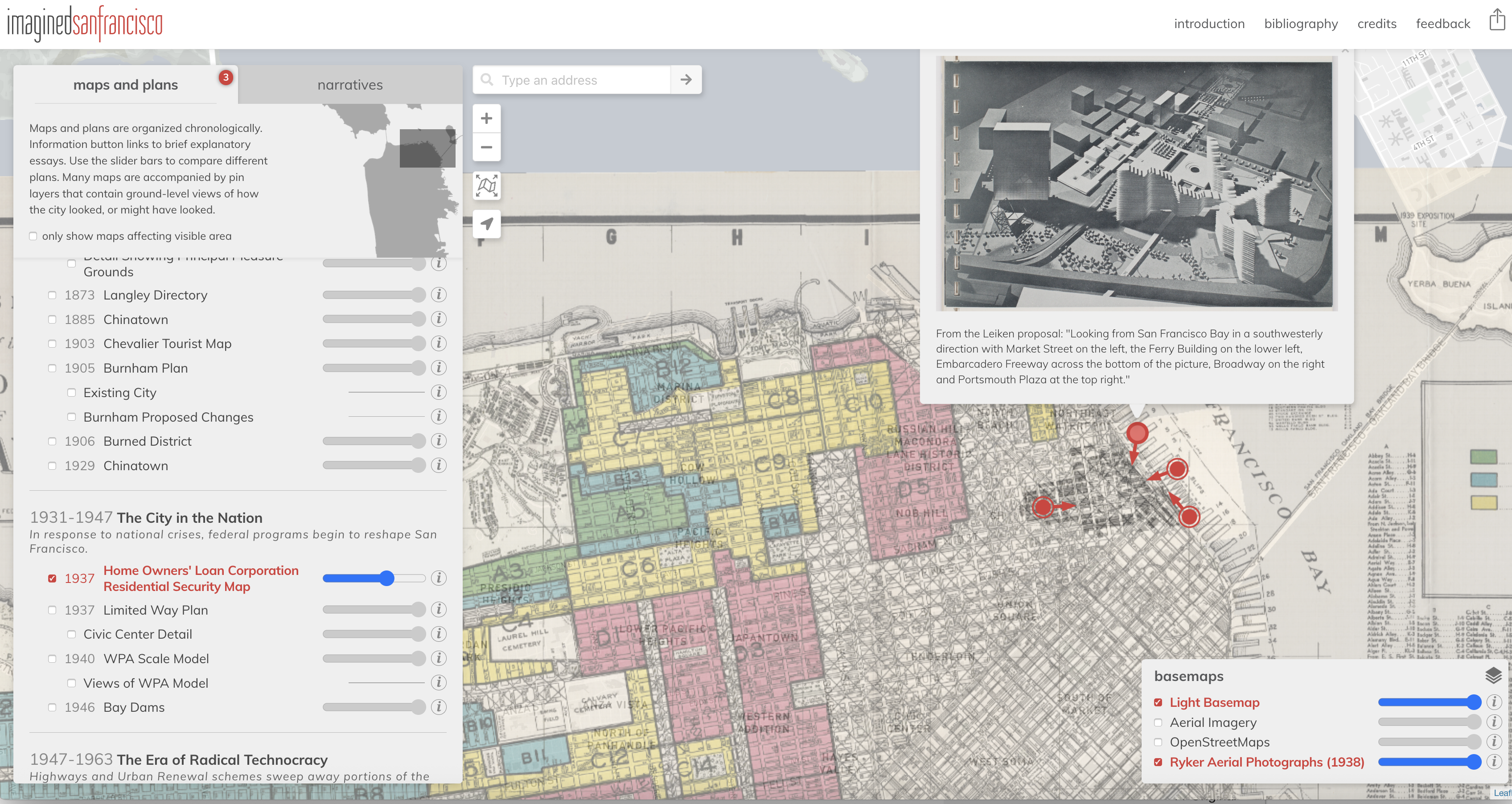
"PLANNING FOR POWER" Grant Application
|
Faiq Mari
|
Overview
I am applying for this grant to support work that I am doing as assistant professor at Birzeit University. Specifically, to support public-facing aspects of teaching in two courses, “Landscape Architecture” and “Architecture in Palestine”.
Background
I have long believed that local actors and concerns should play a central role in the teaching of architecture. My 2013-2014 BP Teaching Fellowship expressed and developed this conviction through universal design and user-expert involvement. In my current courses I continue this philosophy in multiple ways, one of which is a collaboration with a local municipality (Al-Bireh Municipality). In “Architecture in Palestine” this collaboration centers around the municipal archives, which students digitize, make publicly available, and utilize to study architectural and urban history. In “Landscape Architecture” I collaborate with the Municipality on designing food-production gardens on public and derelict private land. Here, farmers, residents, and municipal architects are involved in various respects. In both courses, local problems are used as means to think about universal issues—such as the food-sovereignty crisis in the Global South.
Intended outcome
With this grant I intend to develop two aspects of my teaching which have no sources of funding in the department budget allocation.
The first is to give a public interface to these courses: to create a website and produce printed volumes that disseminate the work of the students and synthesize my teaching philosophy in a manner that is accessible to a public audience. In my experience, such public involvement motivates students (seeing their work’s impact and thus responsibility), pushes the teaching further (by enhancing feedback loops with the targeted community), and catalyzes a similar direction among colleagues.
- Product:
- One website, updated with student work at the end of each semester.
- Two volumes, one for each course, each comprised of multiple issues documenting student work (an issue per semester).
The second is to support the involvement of user-experts and guests in the courses. This would insure that the connection between the courses and the community goes beyond the design of the course and is maintained throughout the semester. While I am already involving guests and user-experts in these courses, this is done pro-bono and is becoming a burden and an impediment especially for lower-income guests.
- Product:
- Modest honoraria.
- Local transportation expenses and other logistical costs.
I see the grant as seed-funding for this pilot: launching and maintaining the website, and printing a limited number of books—both for two years, during which other funding can be applied for and obtained to print at a larger scale, include more courses, and maintain the website for longer.
Budget
Website design: $1,000
Website maintenance: $1,000/year
Book design: $500/issue ($1,000/year)
Book printing: $1,000/issue ($2,000/year)
Honoraria: $300/semester ($600/year)
Logistical costs: $200/semester ($400/year)
Total: $11,000 for 2 years
* I will try to obtain the remaining thousand from another source. If I manage to cut costs below the amount granted, the remainder would be used to fund the project for an extra semester or year.
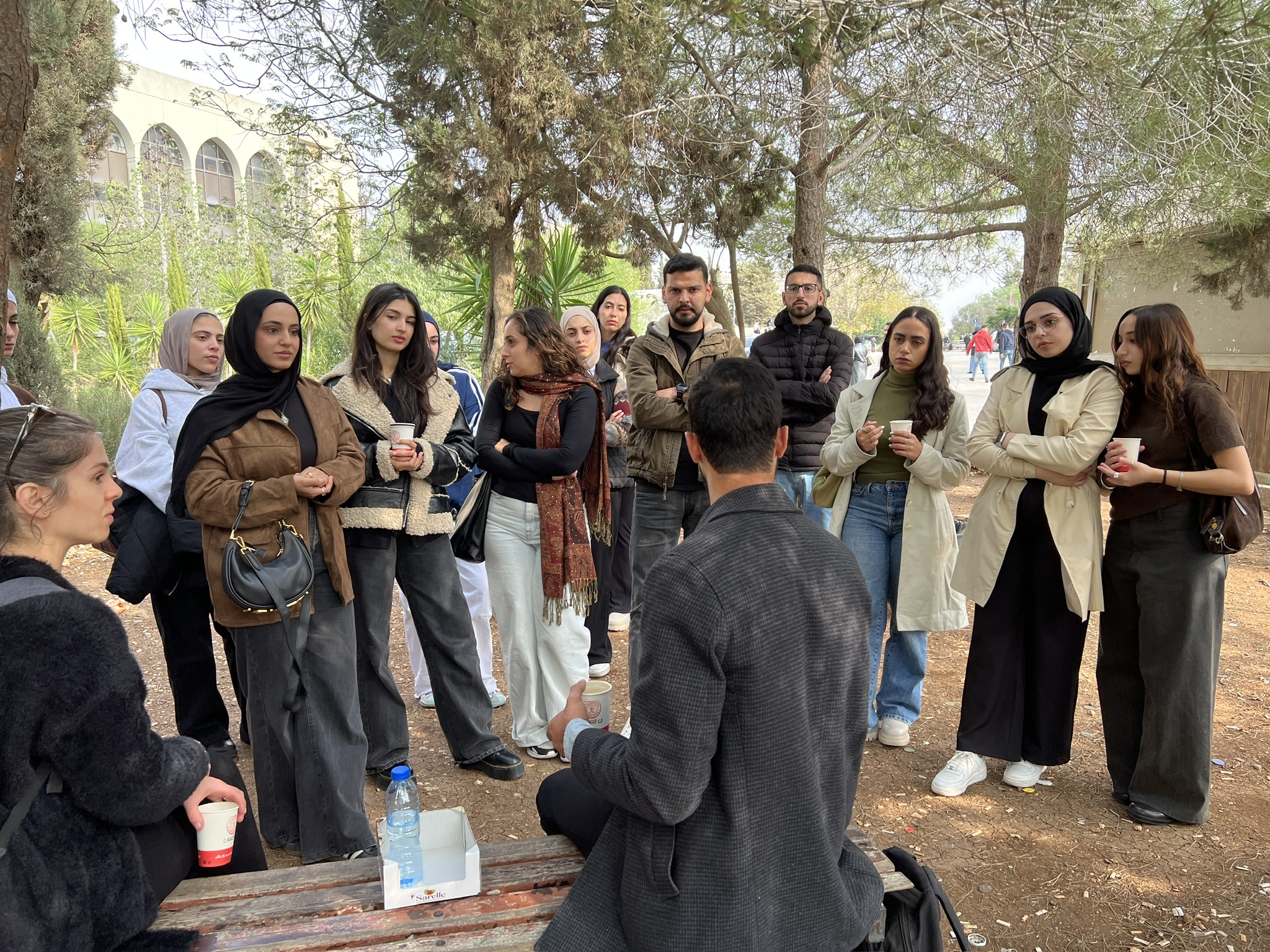
Outdoor seminar at Birzeit University with guest farmer Haitham Canaan, for the ENPL436 (Landscape Architecture) course. December 6, 2025. By author.
|
Ushna Raees
Ushna Raees
BERKELEY PRIZE ENDOWMENT 2025 GRANT PROPOSAL
“ARCHITECTURE FOR THE 98%: ARCHITECTURE FOR THE MAJORITY”
Overview
I am applying for the Berkeley Prize Endowment grant to support the establishment of the 98% Housing Lab, a research-based architectural practice in Karachi, Pakistan. The Lab will develop low-cost, modular, and incremental housing solutions for the 98% of Pakistani households who build informally and without professional guidance. The goal is to create a sustainable, scalable business model that delivers architectural support to underserved communities...not as charity, but as affordable, repeatable design systems.
Background
In Pakistan, architectural services serve the top 2% of society only (elite and upper middle class). The remaining 98% construct and expand their homes informally over many years, often with untrained masons and without drawings. This produces unsafe structures, poor ventilation, inadequate sanitation, and rapid deterioration. Despite shaping most of the urban fabric, this “silent architecture” remains largely unstudied and unsupported by formal practice. After years of working for the high-income clients, I recognized the urgent need for a practice that focuses on the majority and redefines the social purpose of architecture in my context.
Project Description
The 98% Housing Lab will conduct a one-year pilot in a low-income/lower middle class neighborhood in Karachi. The project includes three components:
- Field Research and Surveys
We will document 40–60 households to understand spatial patterns, construction methods, structural vulnerabilities, ventilation, sanitation, and families’ incremental expansion plans. Students will participate in mapping, interviews, and spatial documentation. This data becomes the foundation for all design solutions. - Development of Low-Cost, Incremental Housing Solutions
Using the research findings, the Lab will create standardized, affordable design tools, including:
– micro-renovation packages for ventilation, daylighting, and passive cooling
– low-cost sanitation and drainage improvements
– modular, engineered rooftop room templates
– structural strengthening guides for common vulnerabilities
– step-by-step incremental building manuals families and masons can follow
All solutions prioritize affordability, safety, replicability, and compatibility with local materials and skills. - Pilot Implementation and Business Model Testing
We will work with 10–15 households to test the interventions through design consultations, low-cost drawings, and small built prototypes. The pilot evaluates a viable practice model based on fixed-fee design packages, partnerships with local masons, template-based construction drawings, and community workshops. The outcomes will be compiled into a public digital resource: the 98% Housing Toolkit.
Student Involvement
The Lab will involve final year students/ fresh graduates from architecture, structural engineering, mechanical engineering/MEP, and urban studies. Architecture students support surveys, drawings, and spatial strategies. Structural engineering students assess rooftop additions and develop low-cost strengthening methods. MEP students propose ventilation, cooling, drainage, and sanitation upgrades. Each student receives a stipend to ensure ethical engagement. The Lab becomes a real-world classroom where academic learning directly informs safer, healthier housing.
Funding Needs and Timeline
The Berkeley Prize Grant will support fieldwork equipment, student stipends, prototype materials, office setup, community workshops, and production of the digital toolkit. The pilot will be completed during 2026–2027, after which the Lab will continue as a self-sustaining practice.
Conclusion
The 98% Housing Lab advances the social art of architecture by making professional support accessible to those who shape the majority of our cities. It reimagines architectural practice as a tool for empowerment, safety, and dignity…demonstrating that architecture can serve the majority and remain viable. I’m not proposing a charity organization or an NGO, I’m thinking of establishing it as a viable business in future by targeting the majority.
Daves Rossell
|
Berkeley Prize Endowment 2025 Grant Proposal
“PROPOSING SERVICE THROUGH THE ARTS TO THE PEOPLE”
Overview
I am applying for a grant from the Berkeley Prize Endowment to support the research and proposal of multiple class proposals for undergraduates and graduates at the Savannah College of Art and Design (SCAD) to collaborate and use their talents in providing needed services for non-profit or governmental entities in Savannah, Georgia. Every student will use their diverse talents in a socially responsible, compassionate manner, as well as to contribute to a written component that all projects will include.
Background
SCAD has begun recently to offer a range of collaborative design studios called SCADpro classes connecting students with businesses “to find creative and inventive solutions to real-world challenges.” I led one in 2024 that focused on the “Colors of Savannah” collaborating with Sherwin-Williams. I was struck by the positive intensity of the student and corporate engagement, and the tangible goal-based orientation to find opportunities for fresh ideas serving the company. I immediately wanted to apply the same energy and creativity to support non-profit, community-based organizations or services in the Savannah area.
“Proposing Service Through the Arts” supports a series of proposals for SCADserve classes allowing the collaborative energy of students from diverse majors to work together to support goals desired by the organizations chosen to be worked with. SCADserve classes are designed to help non-profit or governmental organizations with the same kind of broad, professional skills of a SCADpro, but made available at an affordable cost to the organization.
One project could engage the Historic Savannah Foundation to survey, research history, and provide future design possibilities for Savannah’s lane housing and its historically marginalized residents.
Student Involvement
Each SCADserve would involve an average of 15 students. Depending on the specific deliverables desired by the collaborating agency, students would apply and be chosen from across SCAD’s diverse majors. Architecture, Architectural History, Historic Preservation, Interior Design, Illustration, and Writing are some that I have worked with in the past. All students would collaborate with one another and with the representatives of the organizations supporting the initiatives. I would lead 2.5-hour classes twice a week and monitor other group activity times. Organization representatives would engage at the beginning, mid-point and toward the end to make sure that proposed work is shaping up in the desired and most beneficial manner.
Funding Sources to Date
SCAD has expressed definite interest in facilitating SCADserve classes - especially ones where the preliminary research has uncovered lead sponsors within an organization, and clear deliverables are established prior to teaching.
Projected Completion Date
The completion date for researching and organizing a series of SCADserve classes would be by the end of the 2025-2026 academic year. The actual classes would be taught in sequences of quarters beginning in the 2026-2027 academic year. The fastest possible completion would be in immediately sequential quarters, but that is as yet to be determined.
Daves Rossell, Ph.D., Professor of Architectural History, Savannah College of Art and Design
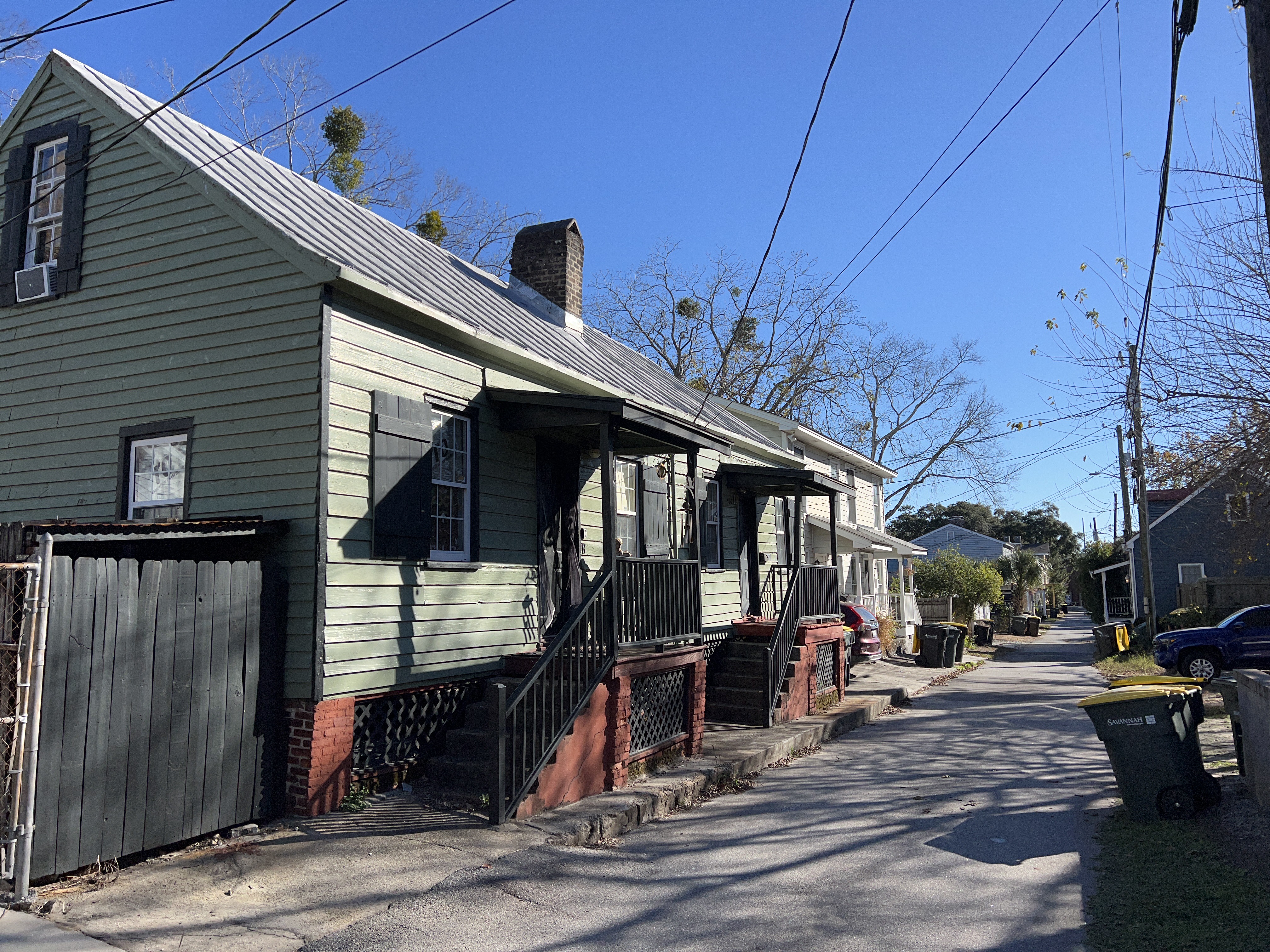
Proposing Service Through the Arts to the People
|
Avikal Somvanshi
Confronting a New Climatic Reality
As the world warms, the "right to the city" is increasingly contingent on access to cooling. Extreme heat acts as a silent architect of inequality, dismantling the social function of public space and turning our civic "living rooms" into hazards. Addressing this requires a pedagogical shift, particularly in Germany, where the built environment was conceived for freezing winters and stands defenseless against the scorching new reality. To bridge this gap, I am applying for the Berkeley Prize grant to support a new interdisciplinary seminar at Technical University (TU) Darmstadt titled Public Open Space in the Age of Heatwaves.
My aim is to facilitate a meaningful North-South knowledge exchange. Drawing on my professional background in India, where managing heat is traditional wisdom, I hope to build upon this experience to help German students navigate their own changing climate. This seminar will investigate how urban form and rising temperatures conspire to undermine public space. It will sift through people's experiences and aspirations to inspire socially resilient cooling design strategies.
A Pedagogy of the Pavement
Drawing on my work as a scientist with TU Darmstadt’s EmergenCity project, this initiative evolves from my two previous teaching endeavours: a theoretical seminar comparing heat legacies in Darmstadt and Delhi, and a separate, week-long Stegreifaufgabe where students reconciled thermal comfort with heritage conservation.
This new iteration moves the classroom to the pavement. It proposes a unique collaboration where architecture students work alongside psychology majors to understand the human side of climate resilience. Designed as an intensive fieldwork experience, interdisciplinary teams will venture into vulnerable neighborhoods to conduct on-site interviews, gathering data on how residents cope with heat. Crucially, students will carry portable thermo-hygrometers to document microclimatic conditions during these interactions. This methodology links the subjective human experience of discomfort with objective scientific data, teaching students that design for resilience is inherently a social challenge.
Tangible Outcomes and Timeline
Outcomes are anchored in student deliverables that will synthesize fieldwork into comprehensive reports and design interventions that propose socially resilient public spaces. The seminar will run in the Summer Semester of 2026, concluding with final student projects. Furthermore, findings will be integrated directly into my ongoing PhD research on urban heat resilience, slated for completion in 2027, ensuring the work is formally disseminated and contributes to the broader academic discourse.
Enabling Innovation through Strategic Leverage
However, realizing this initiative faces a challenge. Severe cuts to state education budgets threaten to confine this exploration to the theoretical realm. While the faculty supports the curriculum, the department lacks funding for the crucial fieldwork component that transforms abstract knowledge into social empathy.
In this context, the Berkeley Prize grant serves as a vital catalyst. It will not just fund a project; it will elevate a standard seminar into a rigorous, on-site investigation. Funding for a Teaching Assistant and survey equipment allows us to break out of the lecture hall and into the city’s vulnerable public spaces. This investment bridges the gap between studying resilience in theory and experiencing it in reality, ensuring the next generation of designers and psychologists is equipped not just with concepts, but with empathy and the empirical tools to master the social art of their profession.
Philip Tidwell
|
On Time: Reflections on the Influence and Legacy of Juhani Pallasmaa
Overview
This application seeks funding from the Berkeley Prize Endowment to support a symposium and publication celebrating and reflecting on humanist values in architectural design. The effort is prompted by two coincident anniversaries that occur in the fall of 2026, the 90th birthday of Finnish architect and professor Juhani Pallasmaa, and the 30th anniversary of his foundational essay, ‘The Eyes of the Skin’. Together, these anniversaries offer a timely opportunity to reflect on the influence of Pallasmaa’s work and to speculate on the cross-cultural relevance of his thinking today.
Background
Finnish architect Juhani Pallasmaa is known widely for his lectures, essays and books, many of which have become touchstones in the discourse on human experience and architecture. His essay from 1996 stands as a seminal critique of ocularcentrism in architecture and a compelling argument for the importance of sensory perception in design. As a young undergraduate, the book had a profound influence on my own thinking and on the essay for which I was awarded the Berkeley Prize in 2003.
However, Pallasmaa’s legacy and thinking extend well beyond this single text. Over the past three decades, he has engaged with a wide range of scholars in disciplines from neuroscience and entomology to poetics and film. In this time, his thinking has evolved and expanded while revolving continually around questions of perception, solitude and the relationship between the individual and collective. Accordingly, the aim of this event is not only to honor or celebrate the life of an author, but also to bring together a diverse range of figures who continue to build on his ideas and legacy.
Framework and Funding
I have initiated this project with my former colleague Jenni Reuter, Professor of Architecture at Aalto University (Helsinki). Together we will serve as a co-chairs of the event and co-editors of the publication. We have already received support from Aalto University with an agreement to provide space, logistical support and a modest financial award for a day of lectures at Aalto University (Alvar Aalto, 1964). This platform and venue allows us to host up to 500 guests, most of them students from across the university, and we seek additional funding of $10,000 to expand the range of presenters beyond the confines of northern Europe. We believe that it is critically important to go beyond Finnish and Nordic borders to include guests that can speak to Pallasmaa’s influence in a global context. To this end, we have made preliminary contact with architects including Wang Zhu (China, 1963), Francis Kéré (Burkina Faso, 1965) and Pezo von Ellrichshausen (Argentina/Chile, 1973 and 1976), all of whom have cited Pallasmaa's influence on their work. We aim to bring these designers into conversation with non-architectural scholars such as Vittorio Gallese (Neuroscience, Italy, 1959) and Susan Stewart (Poetry, USA, 1952) who have enagaged with Pallasmaa in scholarly activities. Funding form the Berkeley Prize Endowment would support travel costs for some of these guests as well as transcription and recording of their presentations to be used in the future publication.
Projected Schedule
The symposium will be held in the last weeks of September, 2026. The publication is expected to be assembled in the following year with an anticipated release in summer of 2027.
Thank you for your consideration.
Philip Tidwell
Assistant Professor of Architecture, University of California, Berkeley
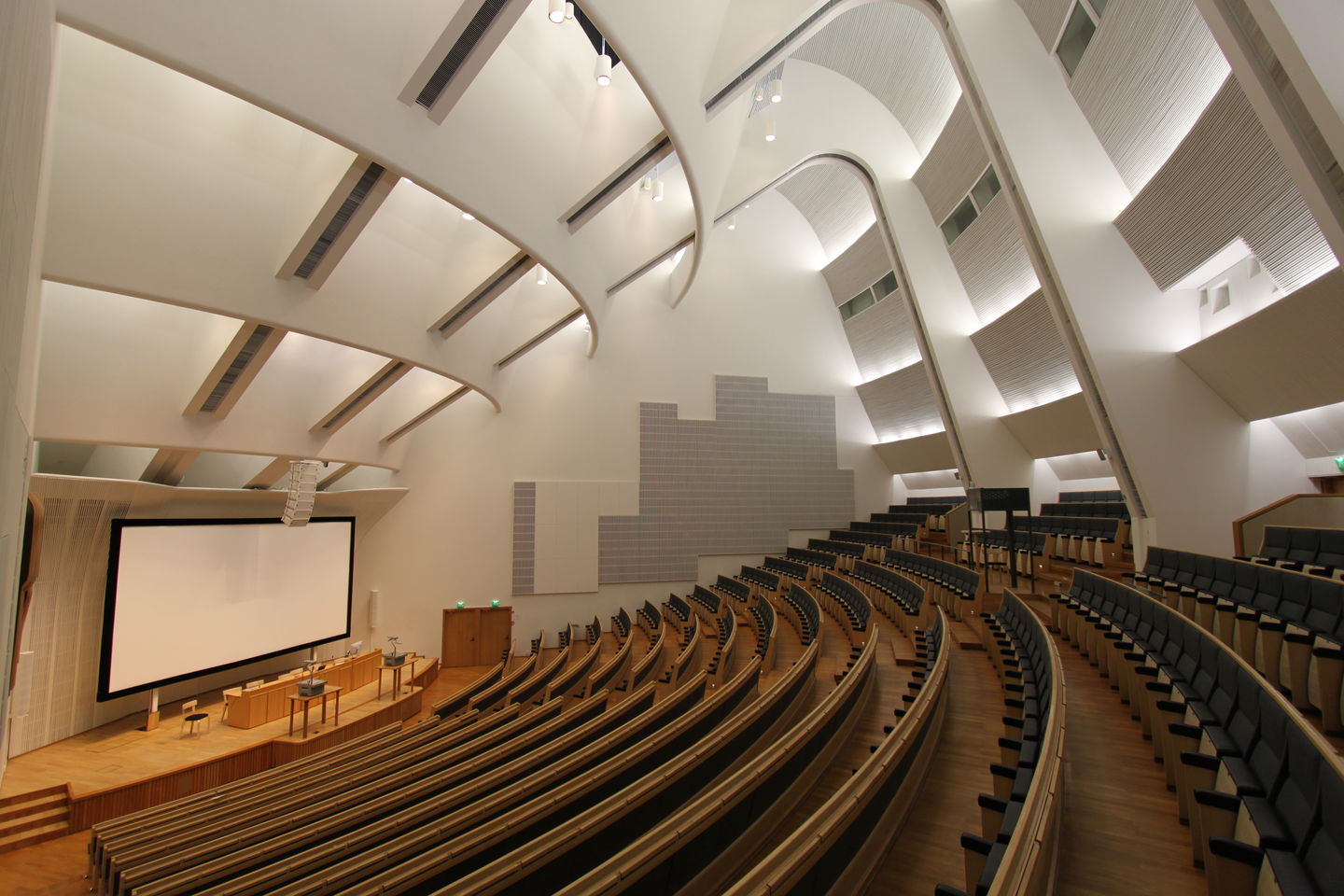
Main Hall at Aalto University, designed by Alvar Aalto, 1964
|
Leslie Van Duzer
In my 36-year academic career, I have only encountered two students with permanent physical handicaps who have completed graduate studies in architecture. One of these students, Annie Boivin, diagnosed as a toddler with rheumatoid arthritis, was my thesis student at the University of British Columbia in 2010-11. Annie excelled in her studies and was immediately hired upon graduation by Perkins & Will. She thrived in their office for thirteen years, becoming what we believe may be the only physically disabled licensed architect in Canada. In 2020, she was featured in an article in Canadian Architect, “Bigger Than Her Body: How Annie Bovin Conquered the World of Architecture While Living with a Disability.”
https://www.canadianarchitect.com/bigger-than-her-body-how-annie-boivin-conquered-the-world-of-architecture-while-living-with-a-disability/
With a demonstrated natural talent for teaching, Annie decided to pursue a PhD and an academic career. She is currently in her second year at UC Berkeley studying under the guidance of Professor Greig Crysler in the History, Theory, and Society track. While addressing ableism within contemporary practice, her research expands the discourse on disability beyond access compliance toward new forms of knowledge production.
Building upon the Berkeley legacy of valuing disabled expertise, her work shifts the paradigm from 'designing for' disability to 'designing as' disabled practitioners. She frames this as a territorial claim: asserting that disabled designers are not just present but are already producing vital spatial knowledge. Yet, they remain mostly invisible erased by a canon that privileges what Jos Boys calls “the dominant body.”
Annie resists this erasure by theorizing disability as a site of epistemic sovereignty. She deconstructs how architectural pedagogy actively produces disablement through normative standards and extractive temporalities, proposing instead a practice rooted in crip wisdom. Crucially, she identifies radical imagination — the ability to imagine a world anchored on authentic disabled needs, knowledge, and desires — as a central component of this wisdom. By weaving varied epistemologies into a genealogy of disabled design thinking, she creates a counter-archive that offers practitioners a lineage of resistance rather than mere survival. This heritage serves as the foundation for developing new design technologies that operationalize abstract principles into tangible tools.
A prime example of this 'crip technology' is a tarot deck Annie has developed that translates disability justice principles, bodymind knowledge, and crip temporalities into design prompts. Rather than treating disability as a technical constraint, this deck invites designers to begin each project by consulting disabled ways of sensing, pacing, and relating — anchoring the design process in practices of interdependence, rest, collective care, disabled joy, pleasure and celebration.
In summary, Annie is constructing a liberatory pedagogy where disabled students recognize their lived experience not as a deficit, but as the generative source of a more just architecture. Her trajectory is deeply aligned with the spirit of Ray Lifchez and the Berkeley Prize. I am convinced she will be a leader in redefining inclusivity in both academia and practice, and I hope you will find her pursuit worthy of a one-time, $10,000 scholarship.
|